Polypropylene Ball Valves serve demanding fluid systems where chemical resistance, low weight, and practical maintenance matter. Buyers may encounter them in water treatment, chemical processing, irrigation, and general industrial service. The right choice depends on more than connection size. Media compatibility, pressure and temperature limits, seal material, actuation, and installation conditions all deserve careful review.
Grand View Research estimated the global polypropylene market at USD 126.03 billion in 2022 and projected a 4.0% compound annual growth rate from 2023 to 2030. This broad material-market forecast provides useful context, but it does not measure valve demand directly. That distinction matters. A growing resin market cannot, by itself, prove that any particular valve will perform reliably in a buyer’s system.
This Top 10 guide compares suppliers and product options through practical purchasing criteria: published specifications, material and sealing details, available sizes, operating limits, documentation, and after-sales support. A compact valve may fit neatly beside a pump, yet still be unsuitable for the fluid or pressure involved. Details count. Rankings are a starting point, not a substitute for checking current manufacturer data and confirming application requirements. Some product information can be incomplete or difficult to compare; buyers should treat that uncertainty seriously.
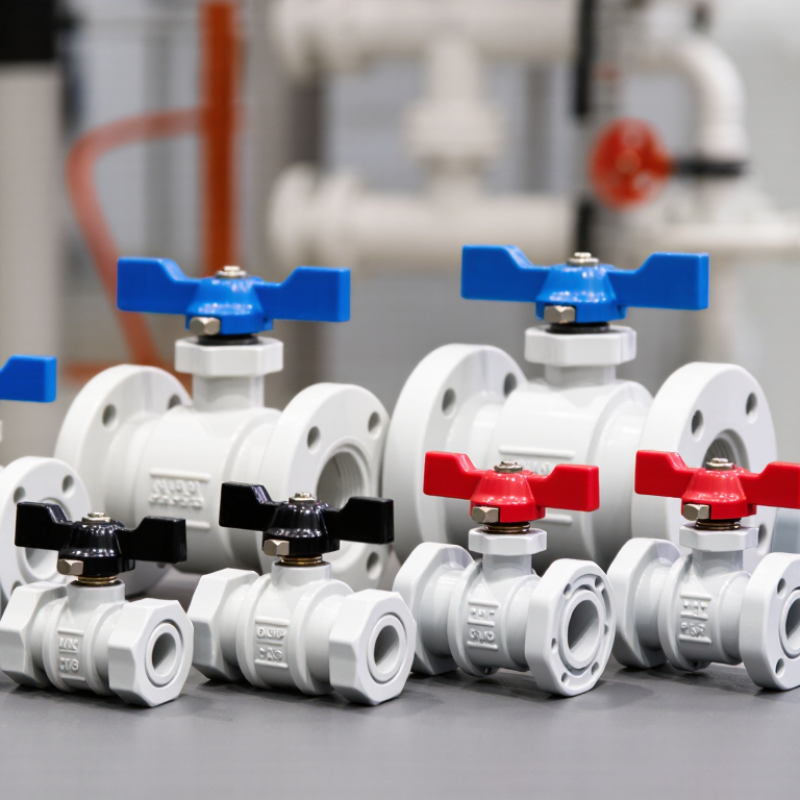
Top 10 Polypropylene Ball Valves for Global Buyers
Define Polypropylene Ball Valves Through ISO 16135 Design Criteria
ISO 16135 offers a framework for evaluating thermoplastic ball valves, including polypropylene models. It addresses design, dimensions, materials, and functional performance. For buyers, this helps turn a product description into specific checks. Look for documented valve size, connection type, pressure rating, and operating temperature. Confirm that the stated limits apply to the actual valve configuration, not just the polypropylene body. Details matter.
A practical review should examine sealing performance, operating torque, and how the valve is tested. Compare supplier documentation with the relevant edition of ISO 16135, and request test records for the offered model. The standard is a useful reference, but a catalogue claim alone does not establish conformity. Check compatibility with the process fluid and installation conditions too. A datasheet can still leave gaps, especially around temperature-dependent pressure limits.
Tips: Ask for the model-specific test report and a pressure-temperature chart. Check connection dimensions before ordering. Do not assume every polypropylene valve has identical service limits.
A practical comparison of representative polypropylene ball-valve configurations. Selection should be based on the actual valve’s documented dimensions, pressure–temperature limits, materials, end connections, and applicable ISO 16135 requirements.
| No. | Representative Valve Configuration | Typical Body Material | Common Nominal Sizes | Common End Connections | Typical Pressure Class at 20°C | Typical Service Temperature | ISO 16135 Design Review Focus | Typical Service Considerations |
|---|---|---|---|---|---|---|---|---|
| 1 | Compact two-way manual valve | PP-H or PP-R | DN 15–DN 50 | Socket fusion, threaded, or union ends, depending on design | Commonly PN 10 or PN 16; verify the size-specific rating | Often specified for approximately 0°C to 80°C service; confirm the product limit | Body and end dimensions, pressure–temperature rating, shut-off performance, and operating mechanism | General-purpose liquid isolation; check media compatibility and installation loads |
| 2 | Union-end serviceable valve | PP-H or PP-R body with compatible polymer unions | DN 15–DN 100 | Socket fusion, butt fusion, or threaded unions, as specified | Commonly PN 10; some sizes and designs may be rated PN 16 | Product-specific; many systems limit continuous service to around 80°C | Union and end-connection dimensions, sealing interfaces, pressure rating, and seat tightness | Useful where removal for maintenance is needed; avoid over-tightening threaded joints |
| 3 | Flanged two-way valve | PP-H or PP-R | Typically DN 25–DN 100 | Flanged ends; drilling pattern must be confirmed for the applicable system | Often PN 10; allowable pressure can decrease as temperature rises | Confirm the valve’s pressure–temperature curve; do not assume the 20°C rating applies at elevated temperature | Face-to-face and flange dimensions, pressure–temperature limits, sealing, and operating torque | Check flange compatibility, gasket selection, bolt loading, and pipe-support requirements |
| 4 | Butt-fusion process valve | PP-H or PP-R | Commonly DN 20–DN 100 | Butt-fusion ends | Commonly PN 10 or PN 16 at reference temperature, subject to design and size | Determine from the valve’s published pressure–temperature data and the process conditions | End dimensions, body strength, pressure rating, leakage performance, and suitability of the fusion ends | Fusion procedure and alignment are important; allow the joint to cool before pressurizing |
| 5 | Socket-fusion compact valve | PP-R or PP-H | Typically DN 15–DN 50 | Socket-fusion ends | Commonly PN 10 or PN 16 for selected sizes and designs | Application-dependent; check both the material limit and pressure derating at temperature | Connection dimensions, body and seat performance, operating function, and pressure–temperature rating | Common in compatible thermoplastic piping systems; use the specified fusion tooling and procedure |
| 6 | Threaded-end utility valve | PP-H or PP-R | Commonly DN 15–DN 50 | Threaded ends; thread type and standard must be stated | Product-specific; do not infer the pressure class from thread size alone | Confirm the manufacturer’s pressure–temperature limits for the selected material and size | Thread dimensions, sealing arrangement, pressure rating, and body integrity | Use a compatible thread sealant and avoid excessive tightening that can stress plastic threads |
| 7 | Three-way diverter or selector valve | PP-H or PP-R | Typically DN 15–DN 50 | Socket fusion, threaded, or union ends, depending on configuration | Design-specific; verify the rating for each port arrangement | Confirm the service range and temperature-related pressure reduction | Port layout, flow-path function, sealing between ports, dimensions, and operating mechanism | Check the valve’s flow diagram carefully; porting arrangements are not interchangeable |
| 8 | Lever-operated isolation valve | PP-H or PP-R body with compatible polymer or coated-metal handle components | Commonly DN 15–DN 100 | Available with several connection styles | Often PN 10 or PN 16 at reference temperature, depending on size and construction | Set by the complete valve assembly, not the body material alone | Operating function, required torque, pressure integrity, dimensions, and material compatibility | Provide sufficient handle clearance and avoid using the lever as a pipe-support point |
| 9 | Actuator-ready ball valve | PP-H or PP-R | Commonly DN 15–DN 100 | Socket fusion, butt fusion, threaded, or flanged versions | Valve-specific; confirm the assembly rating when an actuator or mounting kit is fitted | Use the published limits for the valve, actuator, and any installed accessories | Operating torque, mounting interface, pressure–temperature rating, dimensions, and shut-off performance | Confirm actuator torque and fail position; electrical or control accessories may have separate limits |
| 10 | Large-bore process isolation valve | Typically PP-H for chemical-service designs; verify the exact grade | Commonly DN 65–DN 100, with availability varying by design | Usually flanged or butt-fusion ends | Often PN 10 at reference temperature; confirm size- and temperature-specific limits | Application-specific; elevated temperature generally reduces allowable working pressure | Size and face-to-face dimensions, pressure–temperature curve, body strength, sealing, and operating torque | Assess support, thermal expansion, chemical compatibility, and the consequences of pressure surges |
Important: ISO 16135 addresses thermoplastic ball valves; it should be used alongside the applicable edition and the valve’s technical documentation. The standard is not a substitute for a product-specific data sheet, nor does a material name alone establish a pressure rating, temperature range, or certification. The entries above are representative selection categories, not verified ratings for individual products. Before purchase, request documented dimensions, material grades, pressure–temperature data, connection details, and relevant test or conformity records.
It provides criteria for design, dimensions, materials, and functional performance. Check size, connections, pressure, and temperature limits. Details matter.
No. A catalogue statement is not enough. Request a model-specific test report and compare it with ISO 16135 requirements.
Ask for a complete datasheet, test records, certificates, and a pressure-temperature chart. Confirm they match the supplied valve configuration.
No. DN ranges vary by connection type and design. Check the full size range, actual dimensions, and pressure rating for each size.
Not always. Ratings may change with size, temperature, or operating conditions. Confirm the rating for the exact model and DN.
Incorrect dimensions can delay installation. Compare the valve ends with the pipe system before ordering. A small mismatch matters.
It is about 0.90 g/cm³. A sample may feel light beside a metal fitting. Low weight does not prove quality.
No. Density depends on resin grade, fillers, and test conditions. Review material data, seals, chemical compatibility, and service limits.
Review the pressure-temperature curve, seal material, and fluid compatibility. Pressure limits often decrease as temperature rises. This is easy to miss.
Ask for clarification before comparing quotations. I would not reject a valve based on one missing number. But vague documents deserve caution.
Polypropylene Ball Valves are evaluated in this guide using design criteria associated with ISO 16135, with attention to how their construction and intended use affect selection. It compares ten global options by nominal diameter range, PN 10 or PN 16 pressure rating, and available certifications, helping buyers organize key specifications for different piping requirements.
The guide also highlights material and system checks that should be considered before purchase. Typical polypropylene density is about 0.90 g/cm³, while allowable pressure can change with operating temperature and should be verified using ISO 9393-2 guidance. Finally, checking supplier compatibility with ISO 15494 piping systems can help ensure that valves and connected components are suited to the intended installation.

 EHAO
EHAO